Double Solitaire (Turn 3)


How to Play Double Solitaire (Turn 3) — Quick Guide
Goal
Sort all cards into eight foundation piles by suit (two piles per suit). Build up cards in ascending order from A to K. For example, a 10 can be placed on a 9.
Tableau Columns
Arrange cards in the 9 columns in descending order, alternating colors. For example, a J can be placed on a Q or Q.
Moving Cards
Move cards individually or in pre-sorted groups that follow the rules.
Empty Columns
Only a K can start a new column.
Stockpile and Waste Pile
Click the stockpile to flip 3 cards to the waste. The top waste card is playable.


What is Double Solitaire (Turn 3)?
Double Solitaire Turn-3 is for those who love scale and depth. Instead of one deck, you play with two decks, and each turn reveals three cards at once. Imagine: 104 cards, hundreds of combinations, and endless room for maneuvers and move planning. This isn’t just a harder version of classic Solitaire — it’s a new level, where every game becomes a strategic puzzle.
Two decks don’t just mean double the cards. They demand a fundamentally different approach to planning. Each trio of revealed cards can now be part of two independent sequences, and your task is to balance between them. It’s like playing 3D chess: one wrong move, and the card you need gets buried under layers of others. Success here depends less on luck and more on your ability to read the layout and choose the right line of play.
This version of Solitaire is perfect for those who value the process over the result. It’s like meditation with cards. You take your time, gradually uncovering the pattern hidden in the deck and the layout. Even if victory doesn’t come easily, every game teaches you to spot order where others see chaos.
Double Solitaire (Turn 3) Rules — Step-by-Step
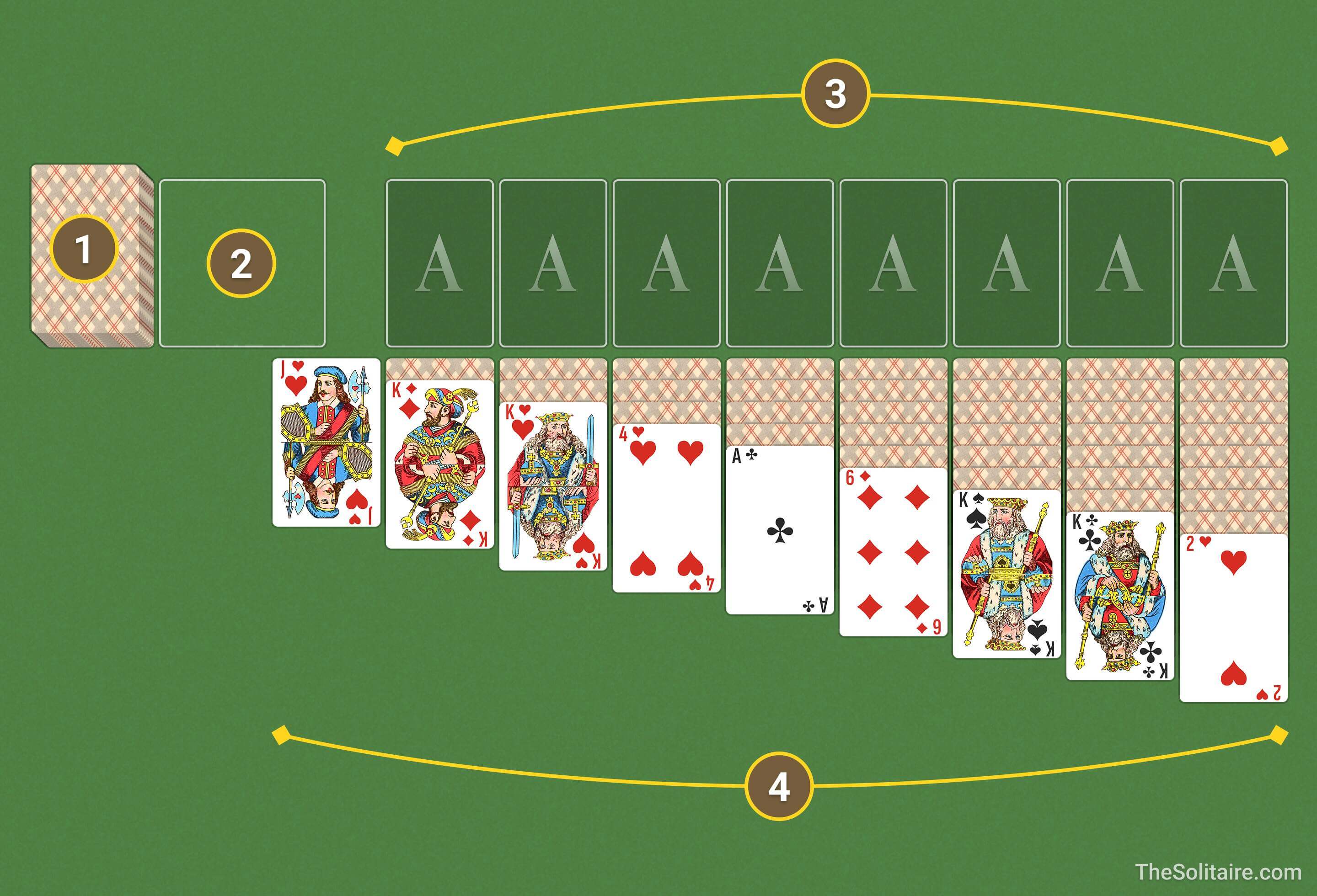
Double Solitaire (Turn 3) uses 2 standard decks of 52 cards (104 cards total).
Piles and layout
- Contains 59 cards.
- Click the stockpile to flip the top 3 cards to the waste pile.
- Holds cards flipped from the stockpile.
- Only the top card is available for play.
- Goal: Build up all cards into 8 foundation piles by suit, 2 piles per suit.
- Start with an A, then add cards sequentially: 2, 3, ..., K.
- 9 columns of cards: 1st column — 1 card. 2nd column — 2 cards, …, 9th column — 9 cards.
- The topmost card of each column is face up. All other cards are face down.
- Build down in descending order, alternating colors. For example: Q, J, 10.
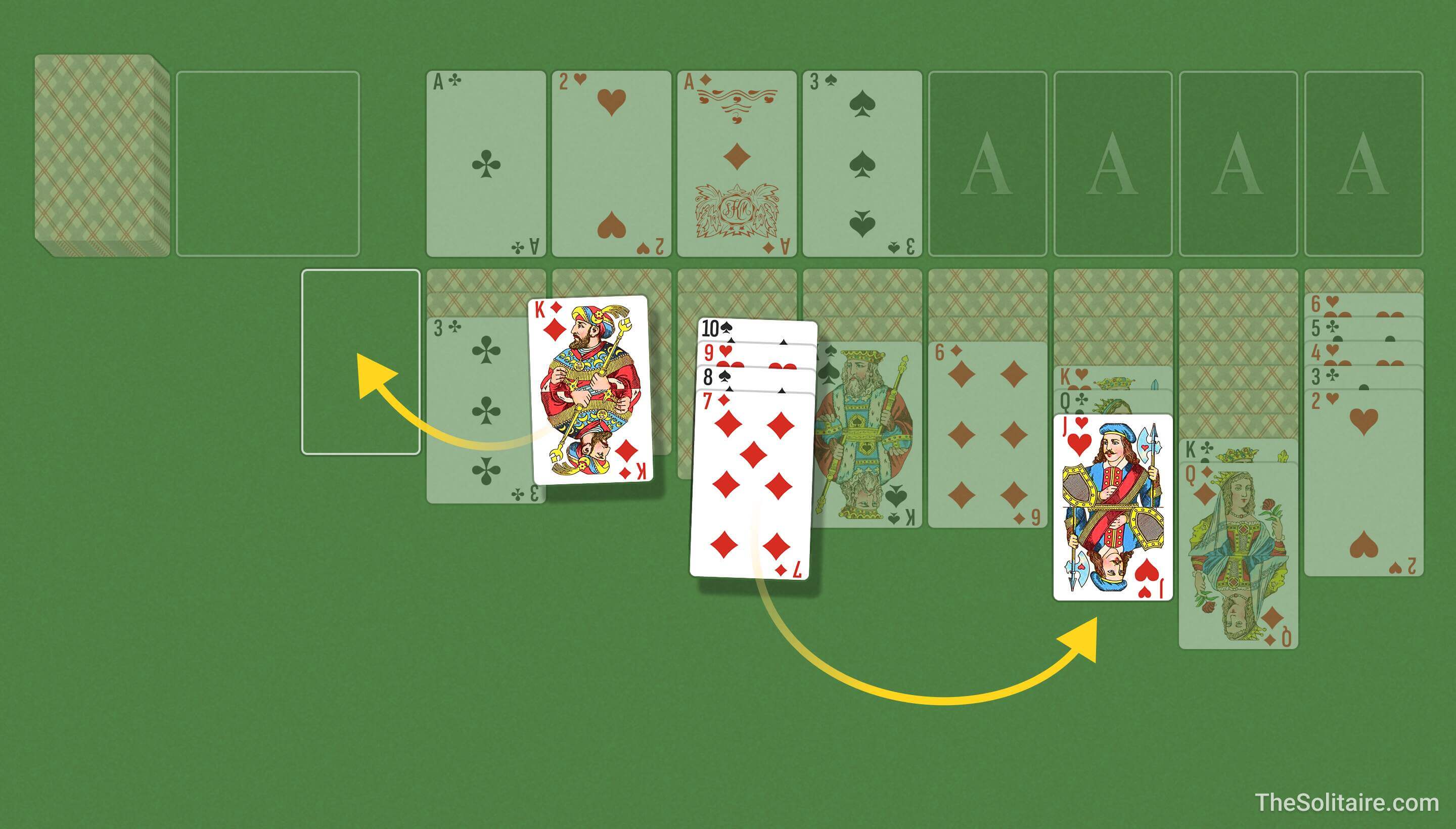
How to Move Cards in Double Solitaire (Turn 3)
- Cards can only be placed in descending order (J, 10, 9, etc.).
- Alternate suit colors. Example: A J can be placed on a Q or Q.
- You can move individual cards or pre-sorted groups that follow the rules.
- Only a K can start a new column.
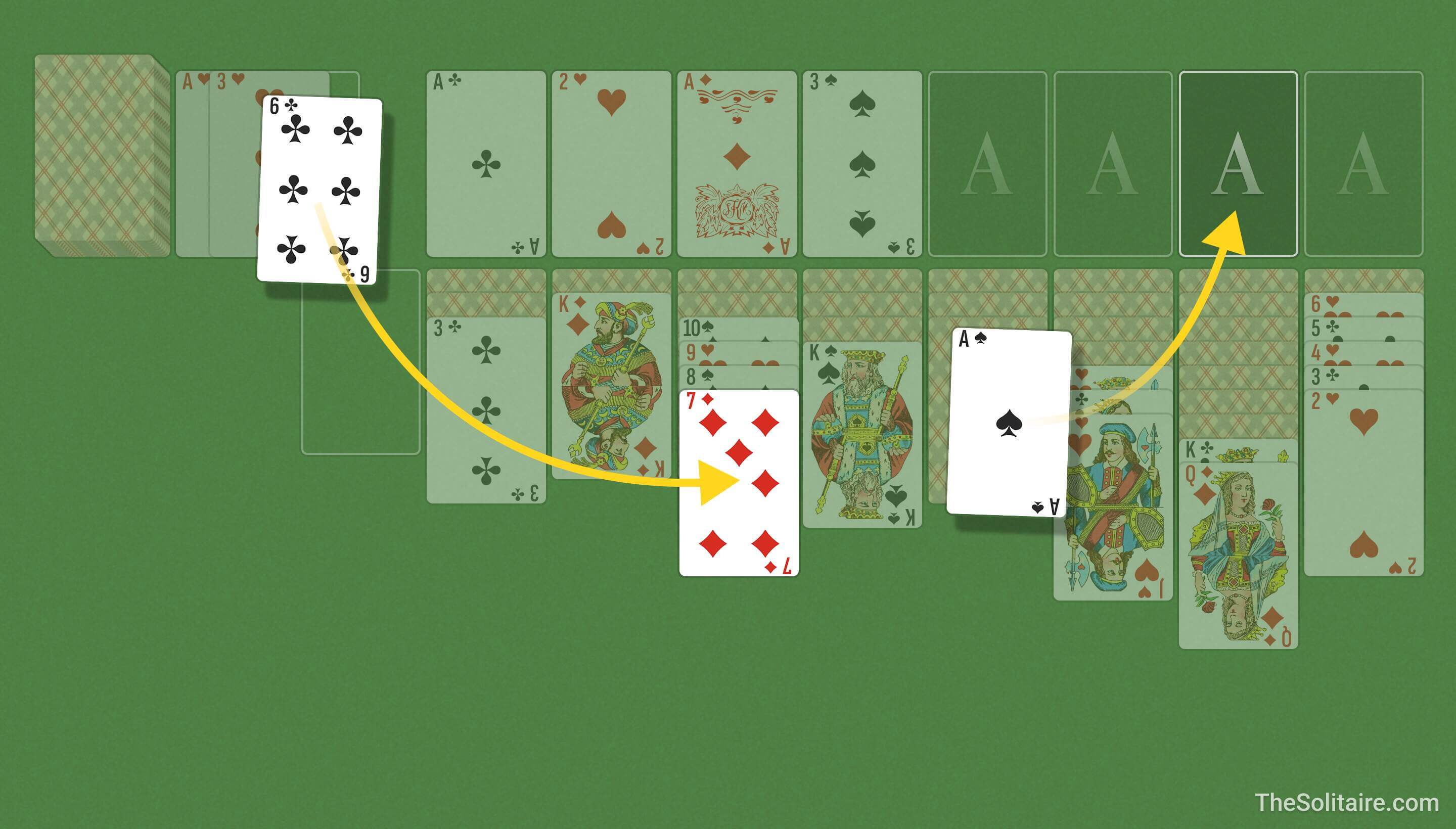
- Start with an A and build up in ascending order within the same suit. Example: A, 2, 3.
- You can move a card from the foundation back to the tableau if needed.
- Click the stockpile to flip 3 cards to the waste pile.
- The top card of the waste pile can be moved to the tableau or foundations.
- Customize the number of passes through the stockpile and difficulty:
- 1 pass: challenging;
- 3 passes: classic;
- unlimited passes: relaxed play.
Keyboard Shortcuts
 Navigate
 Take/Place Card
 Undo
Undo
 Use Deck
 Hint
Hint
 Pause Game
More Three-Waste Double-Deck Solitaire Games
These double-deck games use three separate waste piles, and you can play the top card from each pile. Try Anubis and Bandit. Anubis is a two-deck Pyramid game: you remove cards in pairs that add up to 13. In Bandit, you can move cards one at a time.