Solitaire (Face Up) — Turn 3


How to Play Solitaire (Face Up) (Turn 3) — Quick Guide
Goal
Sort all cards into four foundation piles by suit in ascending order from A to K. For example, a 9 can be placed on an 8.
Tableau Columns
Arrange cards in the 7 columns in descending order, alternating colors. For example, a J can be placed on a Q or Q.
Moving Cards
Move cards individually or in pre-sorted groups that follow the rules.
Empty Columns
Only a K can start a new column.
Stockpile and Waste Pile
Click the stockpile to flip 3 cards to the waste. The top waste card is playable.


What is Solitaire (Face Up) (Turn 3)?
Solitaire Turn-3 is a variation of classic Solitaire designed for experienced players. Instead of drawing one card at a time, you reveal three cards from the deck with each draw. This increases the difficulty because it demands more planning, foresight, and a bit of luck. But winning a Turn-3 game can feel twice as satisfying.
In the 19th century, this version was called “the game for true gentlemen,” and was often played in elite clubs and salons as an intellectual challenge. In the digital age, it has become a popular memory and strategy exercise for millions of players worldwide.
Solitaire (Face Up) (Turn 3) Rules — Step-by-Step
Solitaire (Face Up) (Turn 3) uses one standard 52-card deck.
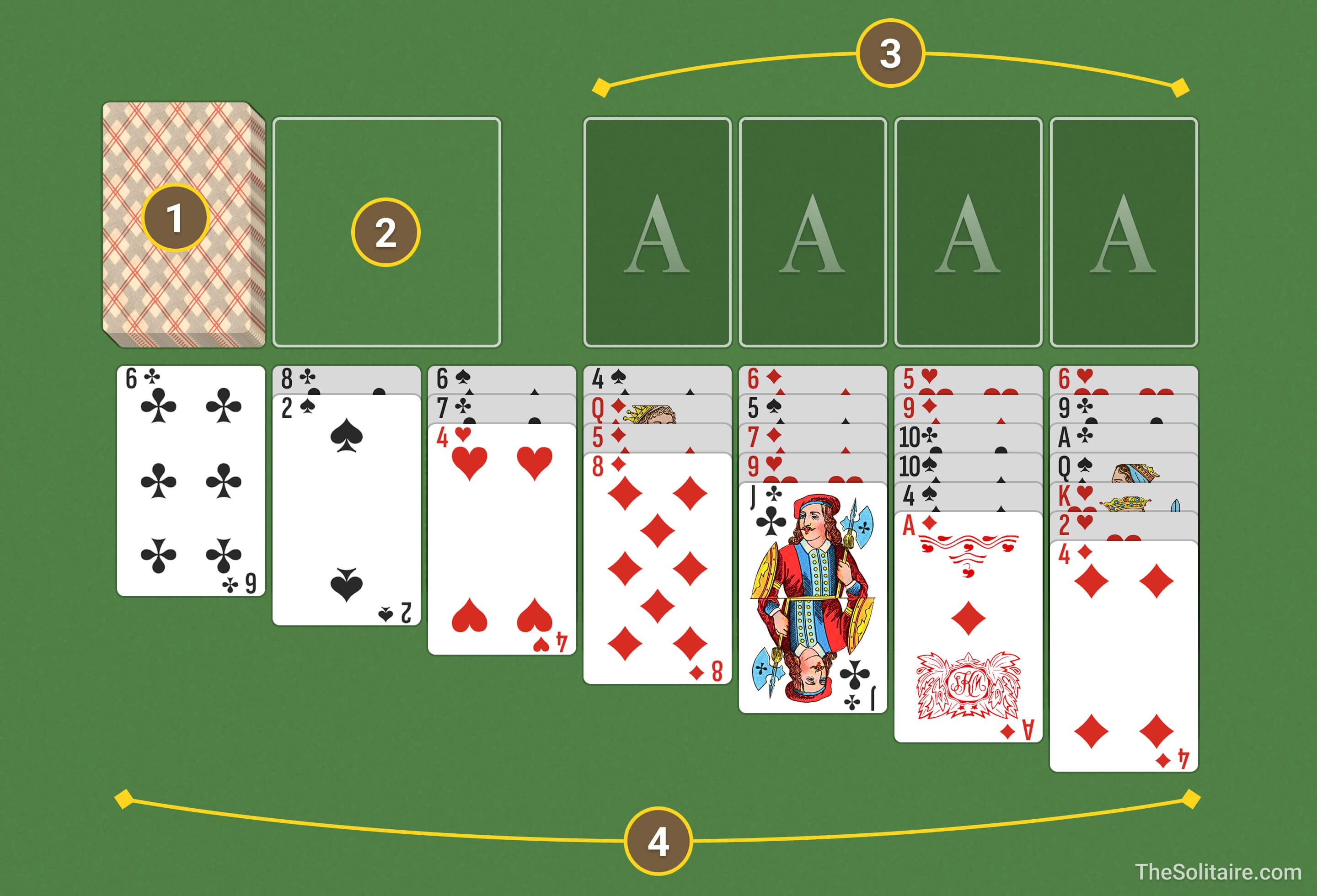
Piles and layout
- Contains 24 cards.
- Click the stockpile to flip the top 3 cards to the waste pile.
- Holds cards flipped from the stockpile.
- Only the top card is available for play.
- Goal: Build up all cards into 4 foundation piles by suits.
- Start with an A, then add cards sequentially: 2, 3, ..., K.
- 7 columns of cards: 1st column — 1 card. 2nd column — 2 cards, …, 7th column — 7 cards.
- The topmost card of each column is face up. All other cards are face down.
- Build down in descending order, alternating colors. For example: Q, J, 10.
How to Move Cards in Solitaire (Face Up) (Turn 3)
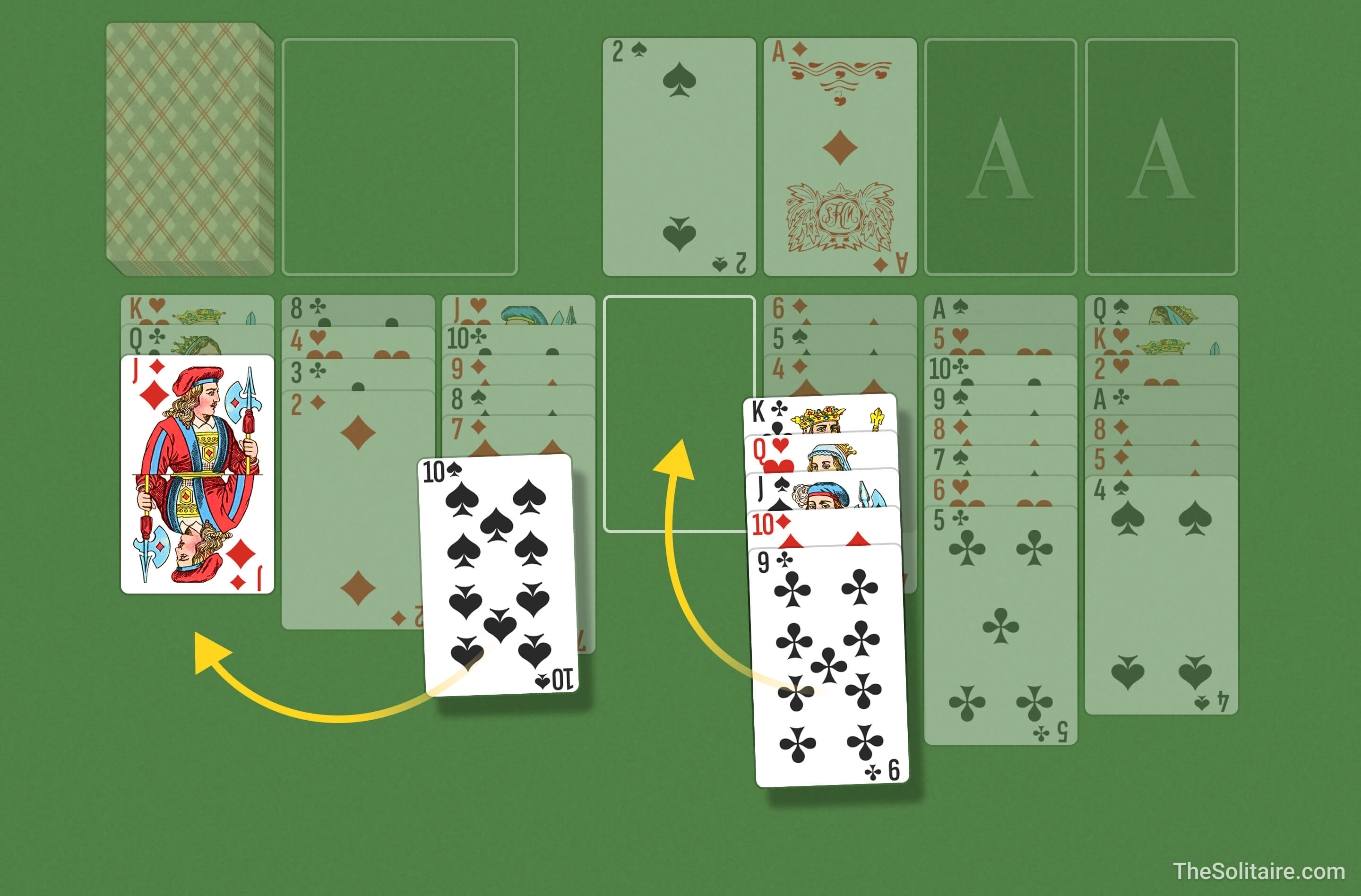
- Cards can only be placed in descending order (J, 10, 9, etc.).
- Alternate suit colors. Example: A J can be placed on a Q or Q.
- You can move individual cards or pre-sorted groups that follow the rules.
- Only a K can start a new column.
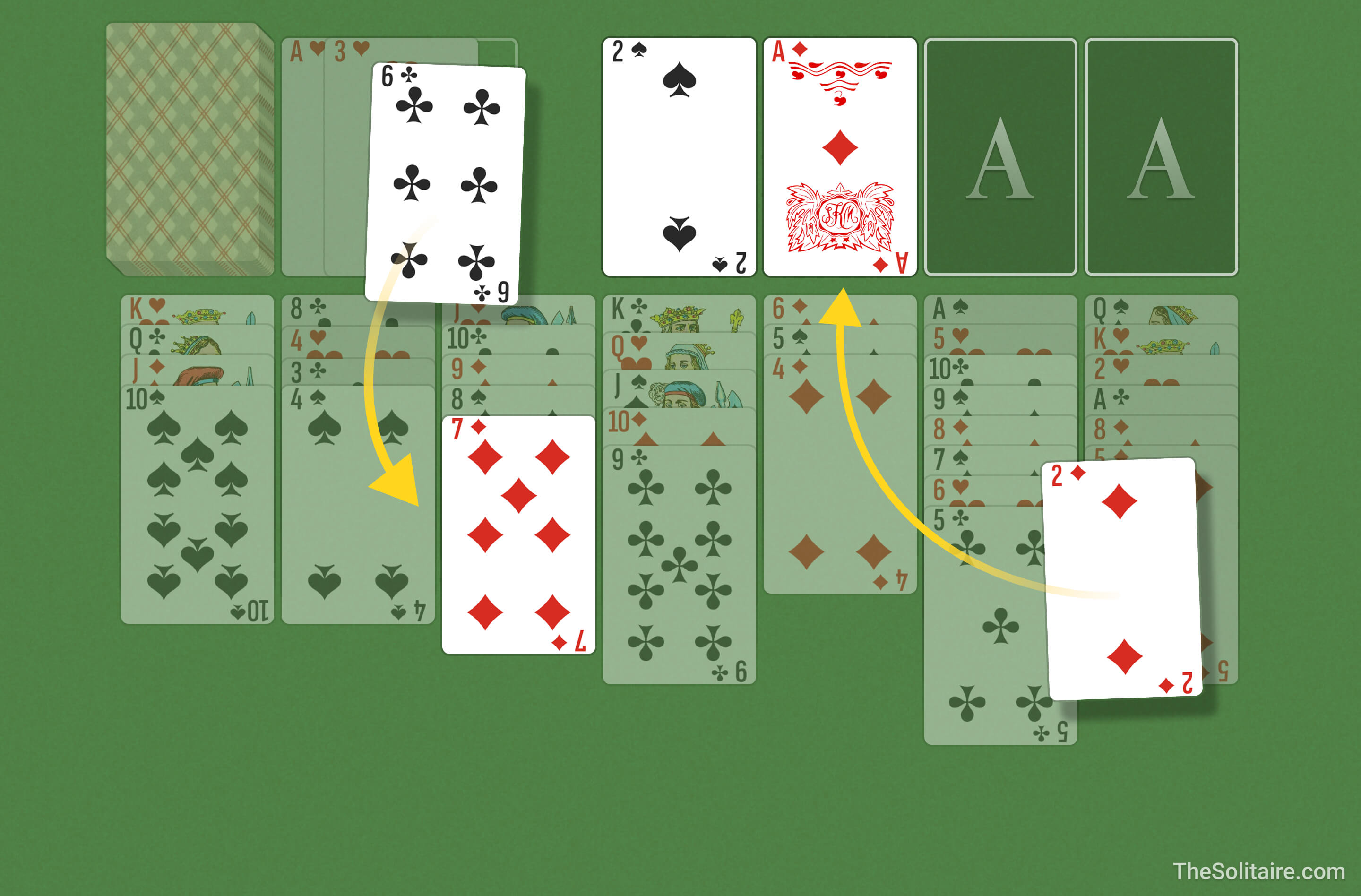
- Start with an A and build up in ascending order within the same suit. Example: A, 2, 3.
- You can move a card from the foundation back to the tableau if needed.
- Click the stockpile to flip 3 cards to the waste pile.
- The top card of the waste pile can be moved to the tableau or foundations.
- Customize the number of passes through the stockpile and difficulty:
- 1 pass: challenging;
- 3 passes: classic;
- unlimited passes: relaxed play.
Keyboard Shortcuts
 Navigate
 Take/Place Card
 Undo
Undo
 Use Deck
 Hint
Hint
 Pause Game

Solitaire (Face Up) (Turn 3) Strategies — Tips & Tricks
A few insider secrets from seasoned Solitaire players to help you win more often.
- Where to start? You can see all the cards in the columns. Locate the foundation starters (A and 2) and prioritize uncovering them first.
- Have a clear plan before emptying a column. Remember, new columns can only start with a K. A space without a King can block your moves.
- Don’t hesitate to use a hint. Click the
 button to see possible moves. In this version of Solitaire, where all cards are face up, the amount of information can be overwhelming. The hint will help you to avoid missing important moves that are easily overlooked among the many cards. Using it is not a sign of weakness—it’s a smart move, especially when you’re stuck or want to make sure you haven’t missed anything.
 - Choose between alternatives. You’ll often find yourself in situations where the same card can be placed in more than one spot. Place it where it will help reveal new cards or create longer sequences.
- Use deck passes strategically. Each time you pass through the deck, new cards become visible. When you take a card from the current trio, it shifts the order of the remaining cards: those hidden underneath will become accessible in future passes. This allows you to control the layout and gradually bring the cards you need to the top.
More Turn-3 Deal Solitaire Games
In Turn 3 games, you draw three cards at a time, but you can only play the top card. If you like this draw style, try King Tut (Turn 3). This solitaire belongs to the Pyramid family: you remove cards in pairs that add up to 13.