Triple Solitaire (Face Up) — Turn 3


How to Play Triple Solitaire (Face Up) (Turn 3) — Quick Guide
Goal
Sort all cards into twelve foundation piles by suit (three piles per suit). Build up cards in ascending order from A to K. For example, a 6 can be placed on a 5 .
Tableau Columns
Arrange cards in the 13 columns in descending order, alternating colors. For example, a J can be placed on a Q or Q.
Moving Cards
Move cards individually or in pre-sorted groups that follow the rules.
Empty Columns
Only a K can start a new column.
Stockpile and Waste Pile
Click the stockpile to flip 3 cards to the waste. The top waste card is playable.


What is Triple Solitaire (Face Up) (Turn 3)?
Triple Face-Up Turn-3 Solitaire reinvents and deepens the classic Solitaire experience. Unlike traditional Solitaire, where hidden cards add an element of chance, all cards are revealed from the start in this face-up layout. Players draw three cards at a time from the deck, which raises the challenge and requires detailed planning.
Although the game is completely open, it’s far from easy. The main challenge lies in the overwhelming number of sequence-building options across the tableau. Each move must be carefully analyzed to gauge its impact on the game as a whole. Sometimes it’s more advantageous to leave a card in place temporarily, so you can unlock better access to other cards later.
This game is a true test for those who value logic and planning. There’s no room for blind luck here—victory brings a unique satisfaction born of attentiveness and deliberate strategy. Dive in and prove that even in a world of open cards, triumph belongs to the sharpest minds.
Triple Solitaire (Face Up) (Turn 3) Rules — Step-by-Step
Triple Solitaire (Face Up) (Turn 3) uses 3 standard decks of 52 cards (156 cards total).
Piles and layout
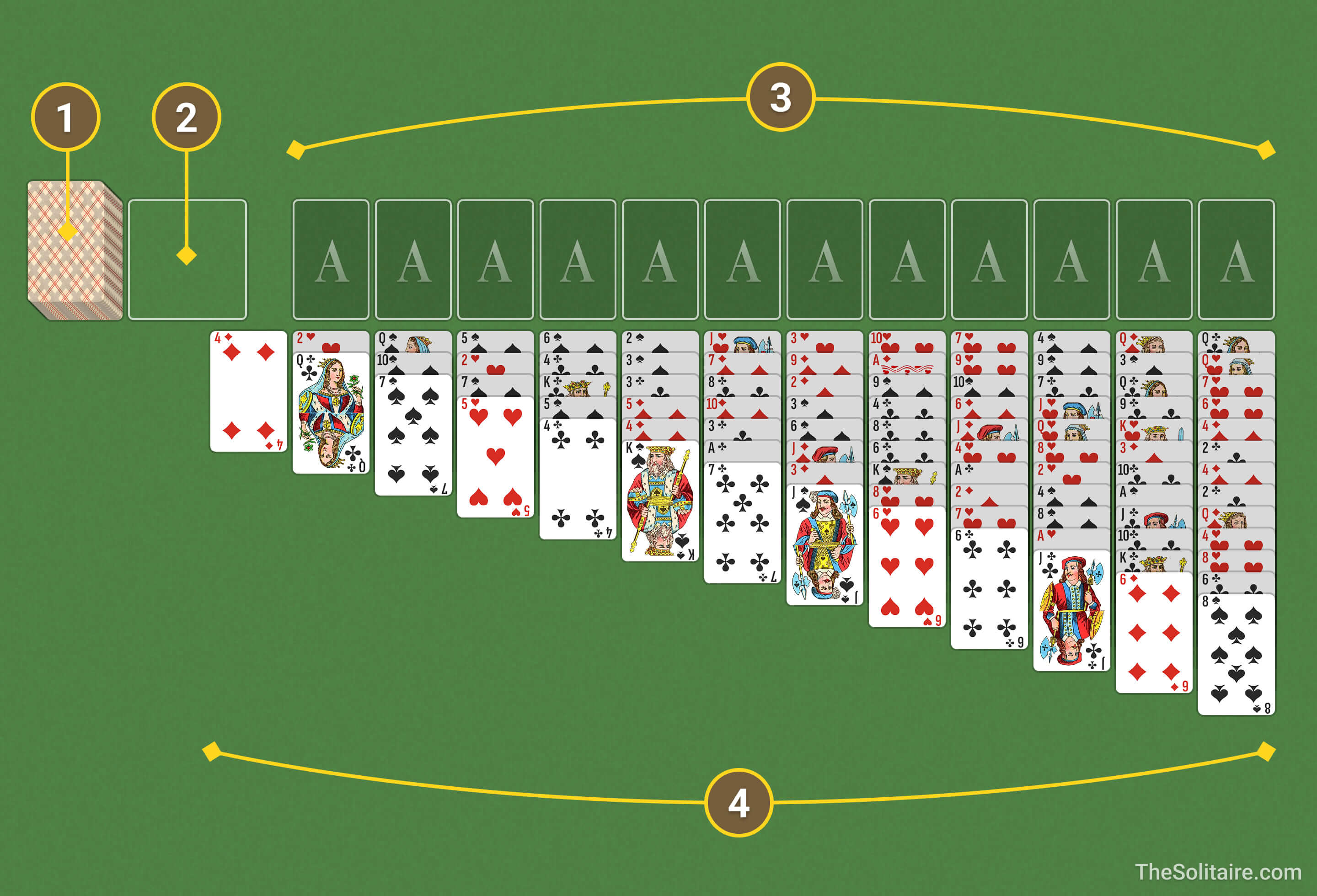
- Contains 65 cards.
- Click the stockpile to flip the top 3 cards to the waste pile.
- Holds cards flipped from the stockpile.
- Only the top card is available for play.
- Goal: Build up all cards into 12 foundation piles by suit, 3 piles per suit.
- Start with an A, then add cards sequentially: 2, 3, ..., K.
- 13 columns of cards: 1st column — 1 card. 2nd column — 2 cards, …, 13th column — 13 cards.
- The topmost card of each column is face up. All other cards are face down.
- Build down in descending order, alternating colors. For example: Q, J, 10.
How to Move Cards in Triple Solitaire (Face Up) (Turn 3)
- Cards can only be placed in descending order (J, 10, 9, etc.).
- Alternate suit colors. Example: A J can be placed on a Q or Q.
- You can move individual cards or pre-sorted groups that follow the rules.
- Only a K can start a new column.
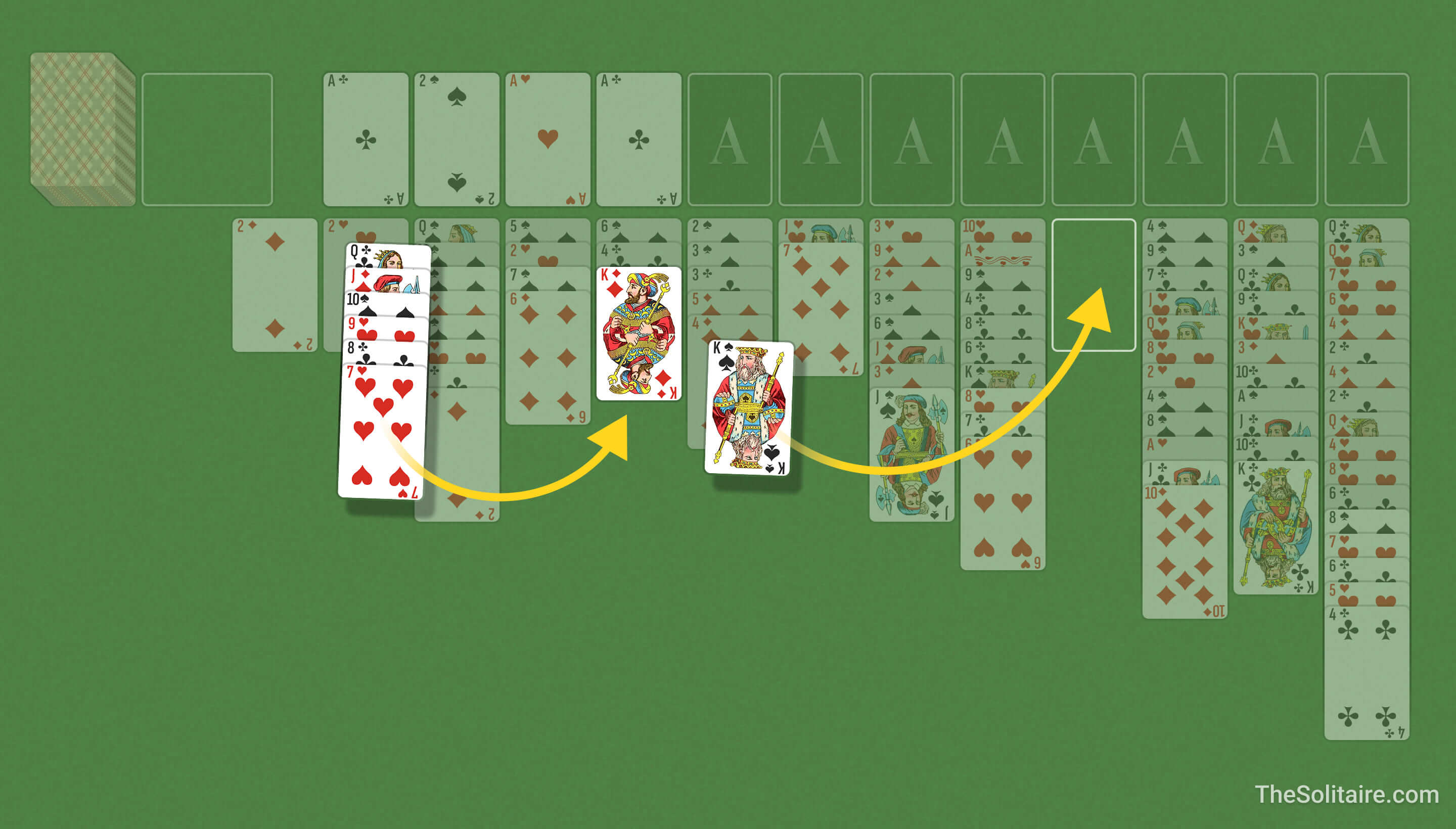
- Start with an A and build up in ascending order within the same suit. Example: A, 2, 3.
- You can move a card from the foundation back to the tableau if needed.
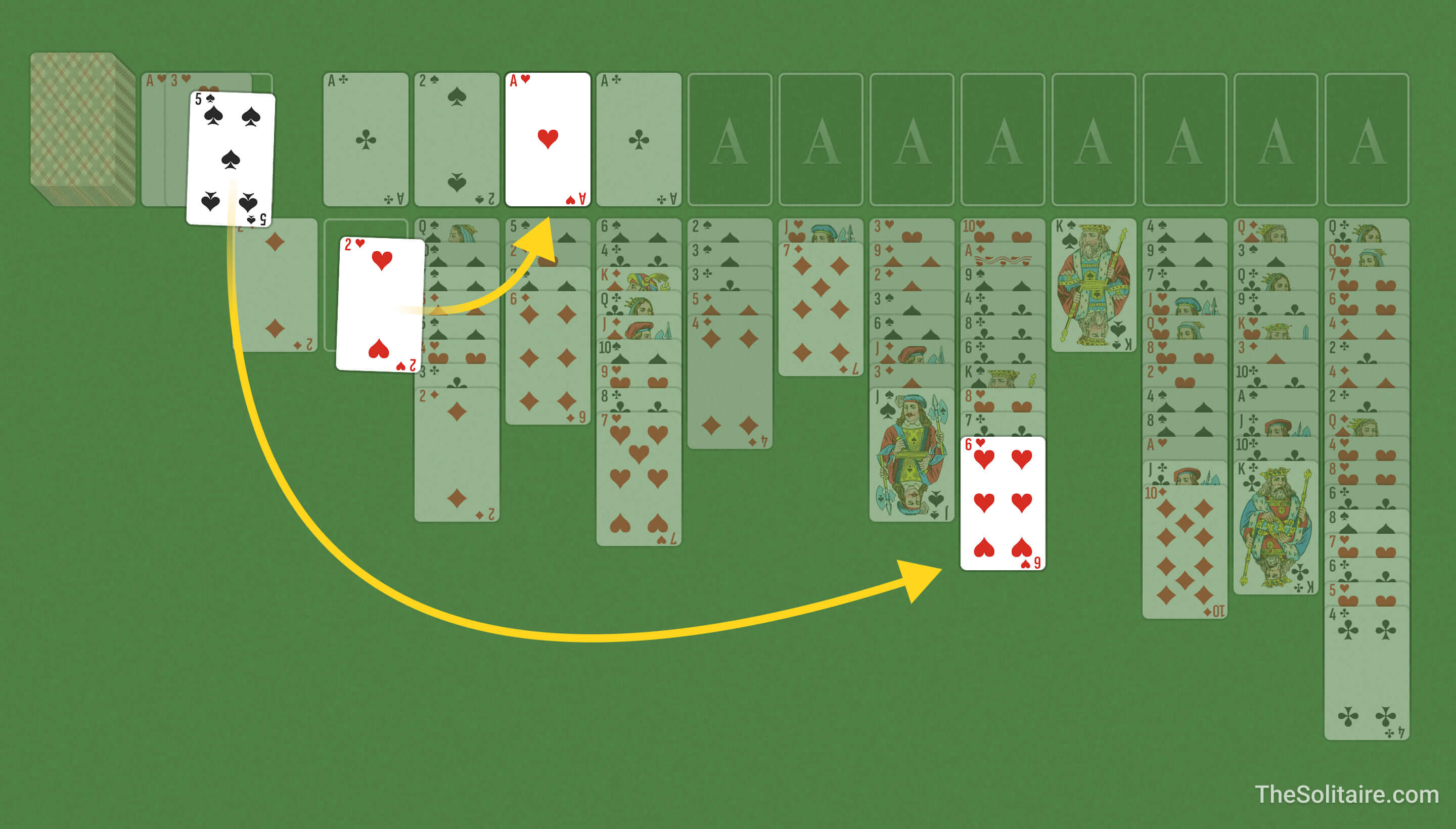
- Click the stockpile to flip 3 cards to the waste pile.
- The top card of the waste pile can be moved to the tableau or foundations.
- Customize the number of passes through the stockpile and difficulty:
- 1 pass: challenging;
- 3 passes: classic;
- unlimited passes: relaxed play.
Keyboard Shortcuts
 Navigate
 Take/Place Card
 Undo
Undo
 Use Deck
 Hint
Hint
 Pause Game

Triple Solitaire (Face Up) (Turn 3) Strategies — Tips & Tricks
A few insider secrets from seasoned Solitaire players to help you win more often.
- Plan like a chess player. All the cards are visible, so use that to your advantage. Don’t make random moves. think several steps ahead and plan each action carefully. Before you move anything, visualize how the layout will change once you make your moves.
- Focus on clearing the lower cards first. Cards at the bottom of columns often block critical sequences. Even if the upper cards seem useful, prioritize clearing the lower levels. This will give you access to Aces and other key cards.
- Kings: mind the colors. Don’t fill empty columns with Kings of the same color. If you already have 3 red Kings () and no black ones (), skip placing another red King. It’s better to wait for a black King than to lock the game.
- Don’t hesitate to use a hint. Click the
 button to see possible moves. In this version of Solitaire, where all cards are face up, the amount of information can be overwhelming. The hint will help you to avoid missing important moves that are easily overlooked among the many cards. Using it is not a sign of weakness—it’s a smart move, especially when you’re stuck or want to make sure you haven’t missed anything.
 - Feel free to experiment! If you change your mind or mess up, hit the
 Undo button to put the cards back where they belong. Try different options — you can always find your way out of a dead end.
More Big Solitaire Games
Triple Solitaire is a big-table game with more cards and a larger layout. If you enjoy larger games on a big screen, try Lincoln Greens, Double FreeCell, and Double Pyramid. Lincoln Greens uses 4 decks, Double FreeCell adds extra free cells and more cards to manage, and Double Pyramid uses two decks.