Solitaire (Face Up) — Turn 1


How to Play Solitaire (Face Up) (Turn 1) — Quick Guide
Goal
Sort all cards into four foundation piles by suit in ascending order from A to K. For example, a 9 can be placed on an 8.
Tableau Columns
Arrange cards in the 7 columns in descending order, alternating colors. For example, a J can be placed on a Q or Q.
Moving Cards
Move cards individually or in pre-sorted groups that follow the rules.
Empty Columns
Only a K can start a new column.
Stockpile and Waste Pile
Click the stockpile to flip cards to the waste pile one by one.
The top waste card is playable.


What is Solitaire (Face Up) (Turn 1)?
Face Up Solitaire, also known as Thoughtful Solitaire, is a special version of classic Solitaire where all cards are face up from the beginning. There are no face-down cards and no hidden surprises, just pure strategy and logic. While luck can play a part in regular Solitaire, in Face Up Solitaire every move you make is a deliberate choice you can plan ahead.
Face Up Solitaire is perfect for those who enjoy relaxed, thoughtful entertainment and a more strategic style of play. Unlike classic Solitaire, where some cards are hidden face down, here you see the entire layout from the start. This changes the whole approach to the game: instead of relying on chance, you can plan your moves several steps ahead.
Thoughtful Solitaire is not just a game. it’s a unique mental exercise. It teaches patience, attentiveness, and the ability to calculate your moves ahead. It’s the perfect choice for those who want to unwind and make the most of their free time.
Solitaire (Face Up) (Turn 1) Rules — Step-by-Step
Solitaire (Face Up) (Turn 1) uses one standard 52-card deck.
Types of Solitaire Piles
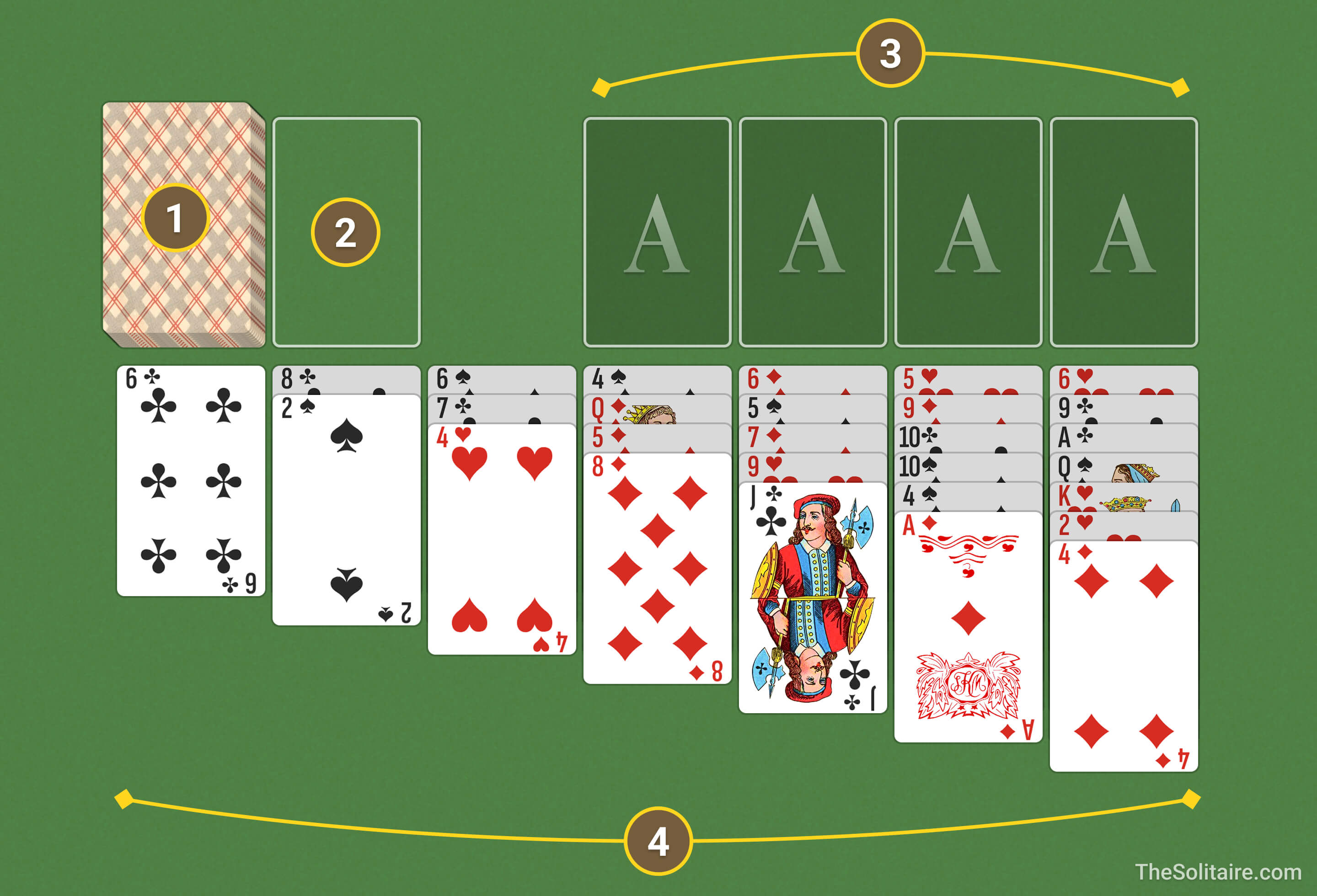
- Contains 24 cards.
- Click on the stockpile to flip the top card one at a time to the waste pile.
- Holds cards flipped from the stockpile.
- Only the top card is available for play.
- Goal: Build up all cards into 4 foundation piles by suits.
- Start with an A, then add cards sequentially: 2, 3, ..., K.
- 7 columns of cards: 1st column — 1 card. 2nd column — 2 cards, …, 7th column — 7 cards.
- The topmost card of each column is face up. All other cards are face down.
- Build down in descending order, alternating colors. For example: Q, J, 10.
How to Move Cards in Solitaire
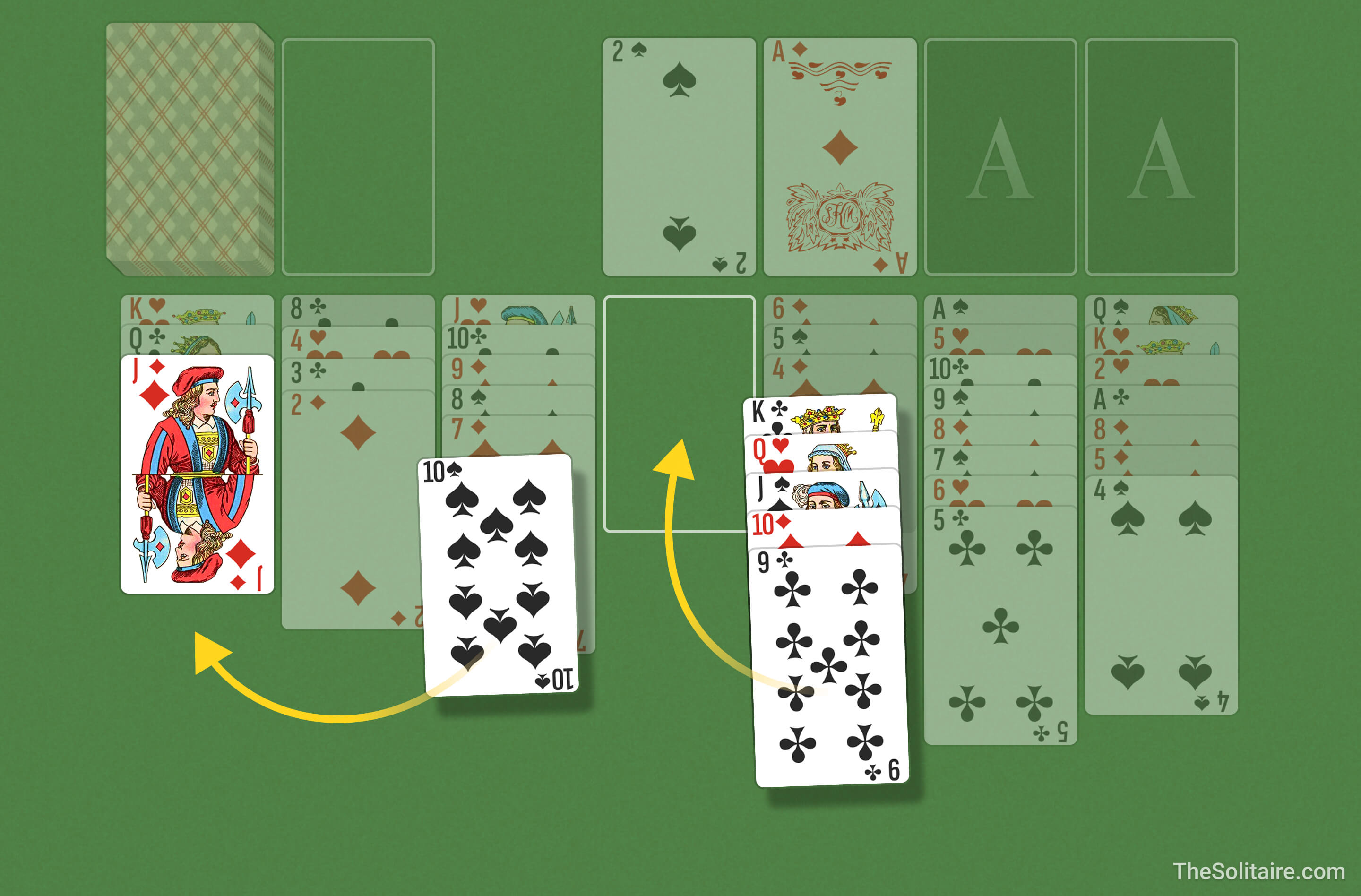
- Cards can only be placed in descending order (J, 10, 9, etc.).
- Alternate suit colors. Example: A J can be placed on a Q or Q.
- You can move individual cards or pre-sorted groups that follow the rules.
- Only a K can start a new column.
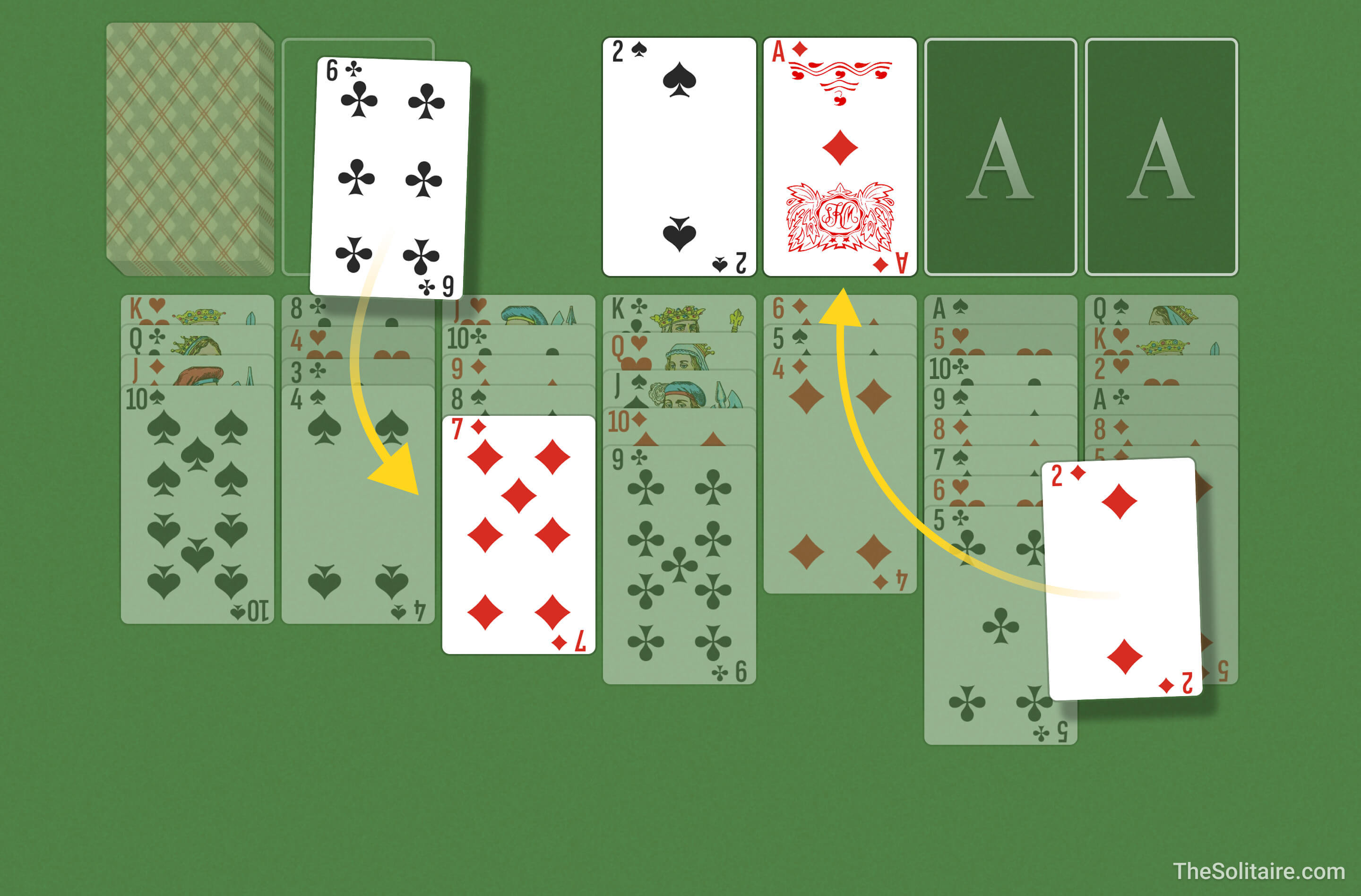
- Start with an A and build up in ascending order within the same suit. Example: A, 2, 3.
- You can move a card from the foundation back to the tableau if needed.
- Click the stockpile to flip cards to the waste pile one at a time.
- The top card of the waste pile can be moved to the tableau or foundations.
- Customize the number of passes through the stockpile and difficulty:
- 1 pass: challenging;
- 3 passes: classic;
- unlimited passes: relaxed play;
Keyboard Shortcuts
 Navigate
 Take/Place Card
 Undo
Undo
 Use Deck
 Hint
Hint
 Pause Game

Solitaire (Face Up) (Turn 1) Strategies — Tips & Tricks
A few insider secrets from seasoned Solitaire players to help you win more often.
- Start by analyzing the layout. Since all the cards are face up from the start, take your time with this step. Pay attention to where the key cards are (e.g., A). This will help you decide where to start.
- Free up the bottom cards. Cards at the bottom of columns often block the entire sequence, creating “traffic jams.” If you see a card you need stuck at the bottom, try to free it as quickly as possible. Sometimes, you’ll have to temporarily break part of a sequence, but it’s worth it: a free card can open up the path to victory.
- Don’t rush to build the foundations. While getting cards to the foundations is the goal, it’s not always helpful. Before sending a card to the foundation, consider whether it might be useful to keep on the tableau for moving other cards in the future.
- Don’t hesitate to use a hint. Click the
 button to see possible moves. In this version of Solitaire, where all cards are face up, the amount of information can be overwhelming. The hint will help you to avoid missing important moves that are easily overlooked among the many cards. Using it is not a sign of weakness—it’s a smart move, especially when you’re stuck or want to make sure you haven’t missed anything.
 - Practice. The more you play, the better you’ll understand the strategy. Over time, you’ll learn to analyze the layout faster, anticipate the consequences of your moves, and find the most efficient solutions.
More Face-Up Solitaire Games
Open Solitaire shows all cards from the start, so the game is about planning your moves with full information. If you like open layouts, try Spider Solitaire (Face Up), FreeCell, and Josephine. Spider Solitaire uses two decks and focuses on building long same-suit sequences. FreeCell is also dealt face up and gives you free cells to hold cards when you need space. In Josephine, tableau sequences are built down by suit.