Solitaire — Turn 3


How to Play Solitaire (Turn 3) — Quick Guide
Goal
Sort all cards into four foundation piles by suit in ascending order from A to K. For example, a 9 can be placed on an 8.
Tableau Columns
Arrange cards in the 7 columns in descending order, alternating colors. For example, a J can be placed on a Q or Q.
Moving Cards
Move cards individually or in pre-sorted groups that follow the rules.
Empty Columns
Only a K can start a new column.
Stockpile and Waste Pile
Click the stockpile to flip 3 cards to the waste. The top waste card is playable.


What is Solitaire (Turn 3)?
Imagine classic Solitaire, but with a small yet crucial twist. Instead of turning over one card at a time, you turn over three cards (Turn 3). This Solitaire variation offers experienced players a more demanding challenge, where every move requires careful attention, planning, and foresight.
In 2019, researchers at the University of St Andrews (Scotland) found that about 82% of three-card draw Solitaire (Turn 3) deals are theoretically solvable. In practice, however, even experienced players win only about 36% of them. These numbers underscore a key truth: despite seemingly solvable odds, winning requires more than luck. It also requires the skill to uncover hidden paths through incomplete information.
Three-card (Draw 3) Solitaire isn’t just a game. It’s a mental gym. You learn to anticipate moves, analyze possibilities, and make decisions with limited data. Each game becomes a micro-adventure in which you battle not only the deck but also your own cognitive limitations. Unlike chess, where all the pieces are visible, you’re playing against randomness itself, and that’s what makes every victory unforgettable.
Solitaire (Turn 3) Rules — Step-by-Step
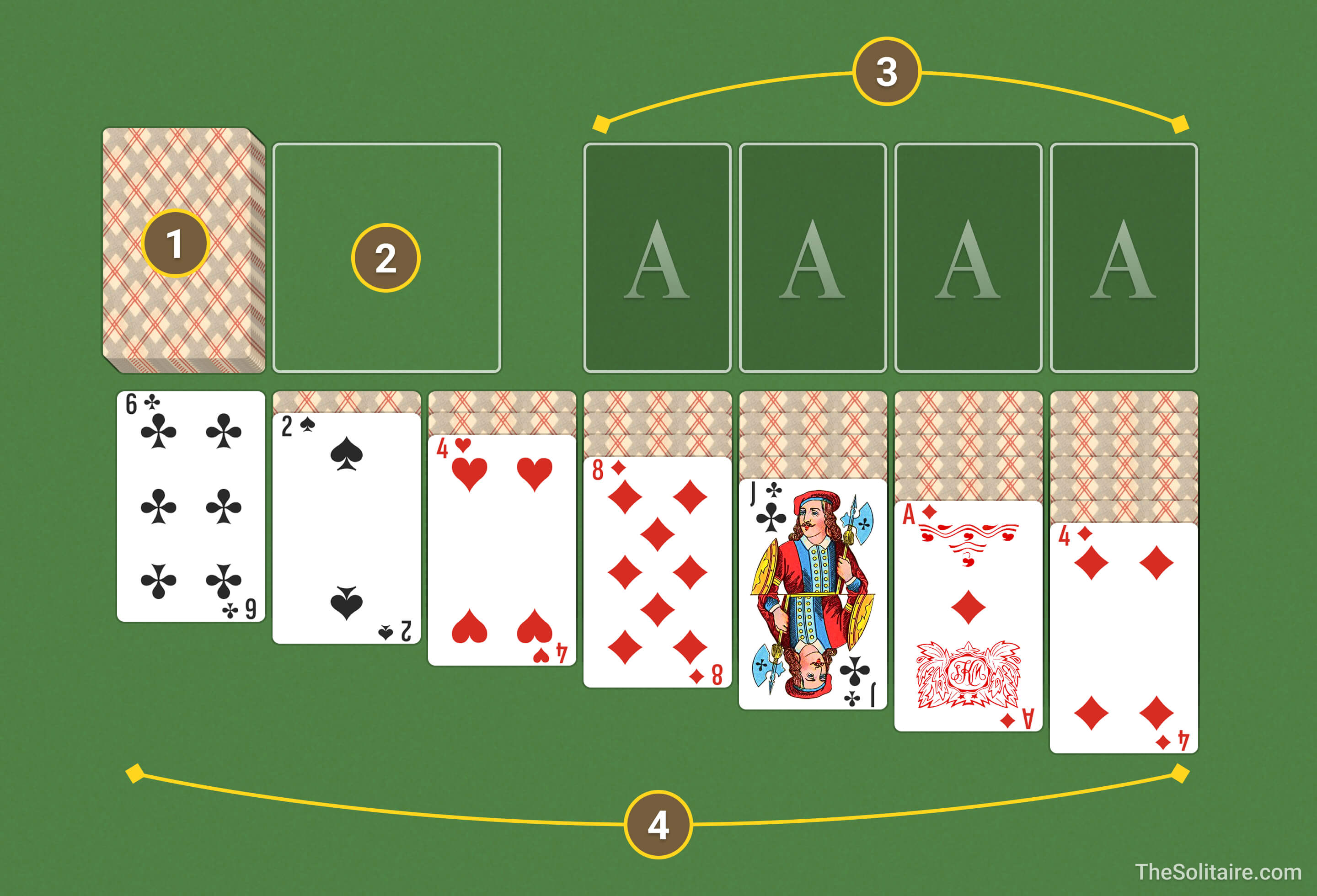
Solitaire (Turn 3) uses one standard 52-card deck.
Piles and layout
- Contains 24 cards.
- Click the stockpile to flip the top 3 cards to the waste pile.
- Holds cards flipped from the stockpile.
- Only the top card is available for play.
- Goal: Build up all cards into 4 foundation piles by suits.
- Start with an A, then add cards sequentially: 2, 3, ..., K.
- 7 columns of cards: 1st column — 1 card. 2nd column — 2 cards, …, 7th column — 7 cards.
- The topmost card of each column is face up. All other cards are face down.
- Build down in descending order, alternating colors. For example: Q, J, 10.
How to Move Cards in Solitaire (Turn 3)
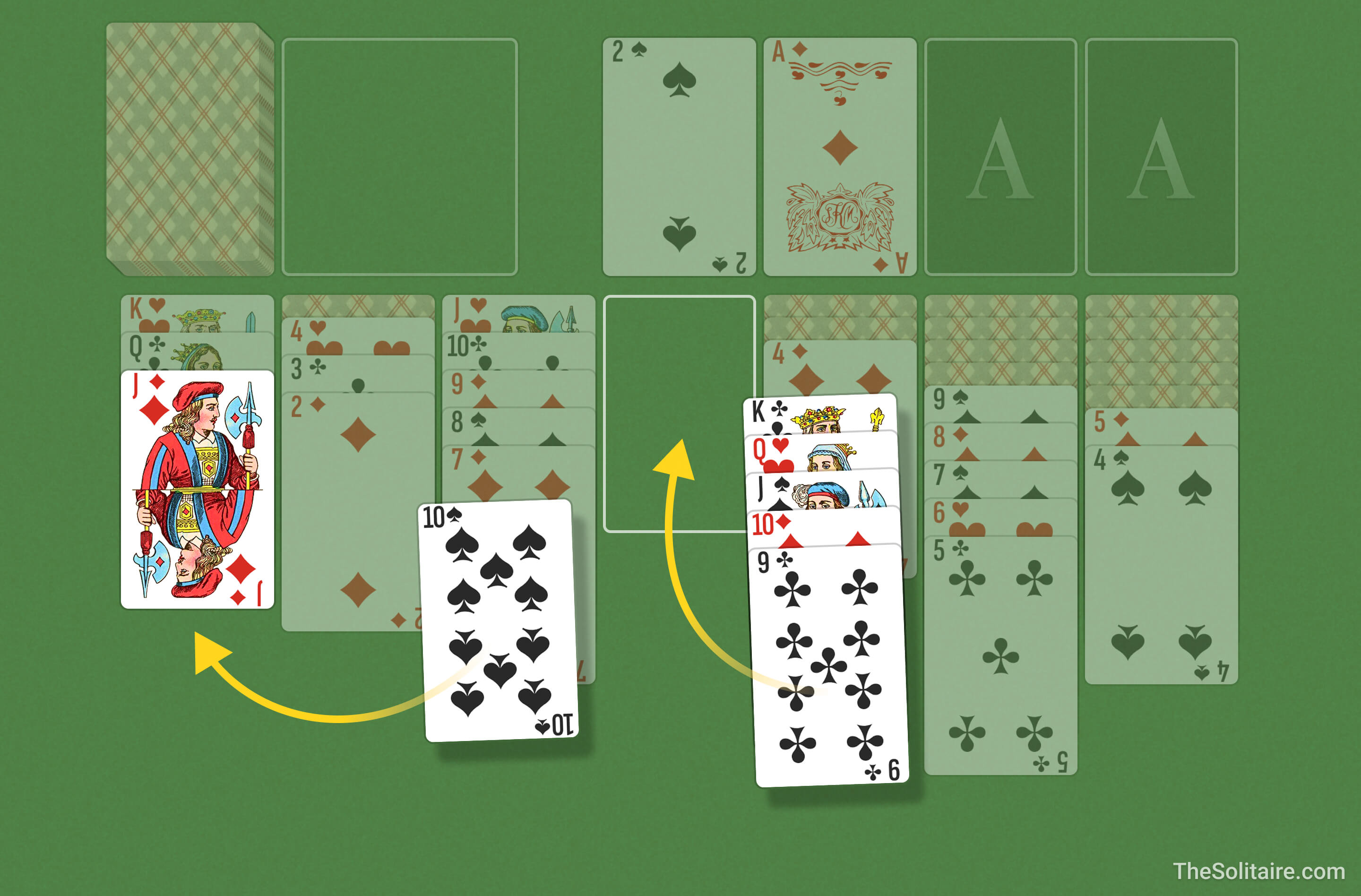
- Cards can only be placed in descending order (J, 10, 9, etc.).
- Alternate suit colors. Example: A J can be placed on a Q or Q.
- You can move individual cards or pre-sorted groups that follow the rules.
- Only a K can start a new column.
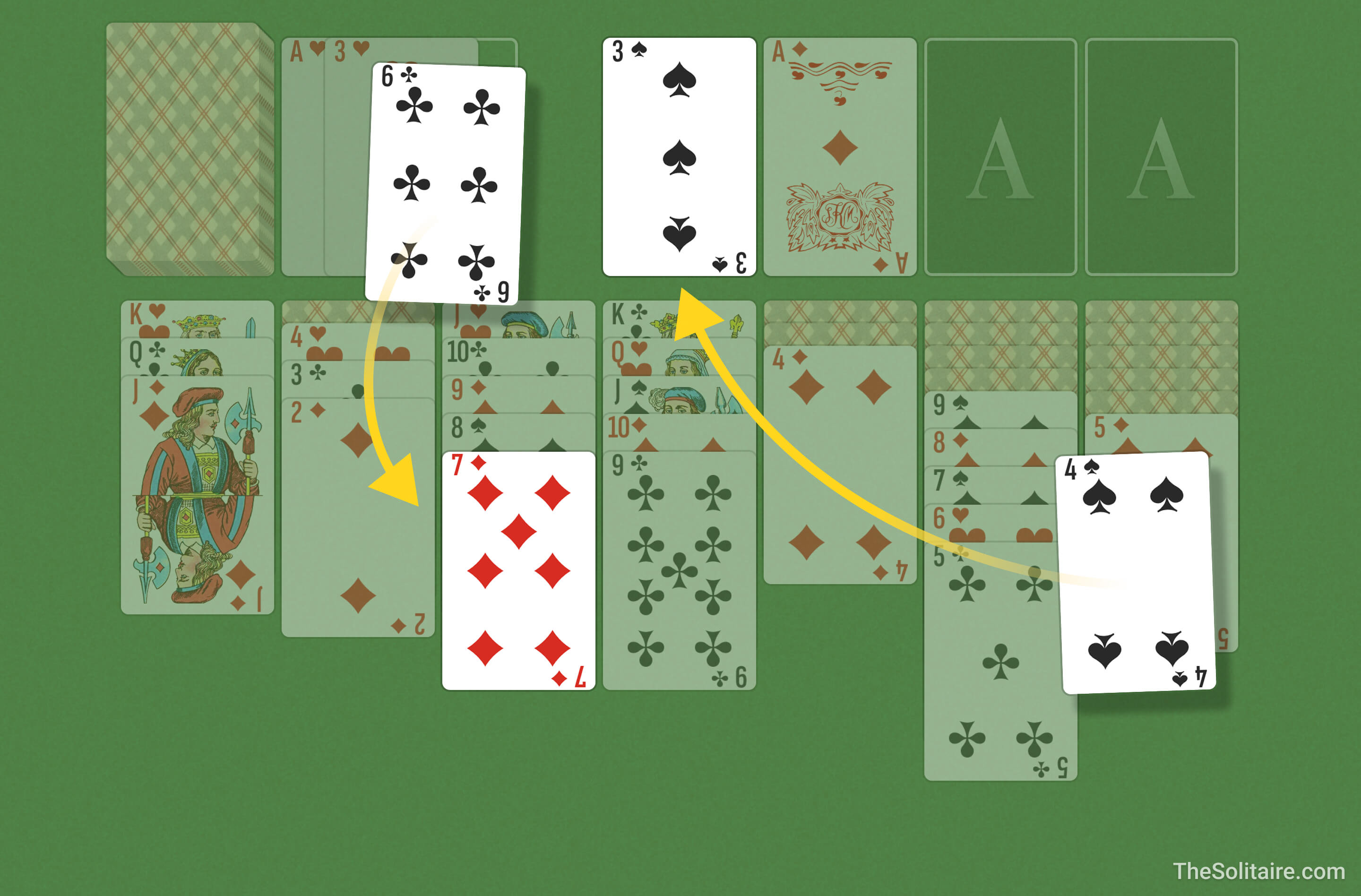
- Start with an A and build up in ascending order within the same suit. Example: A, 2, 3.
- You can move a card from the foundation back to the tableau if needed.
- Click the stockpile to flip 3 cards to the waste pile.
- The top card of the waste pile can be moved to the tableau or foundations.
- Customize the number of passes through the stockpile and difficulty:
- 1 pass: challenging;
- 3 passes: classic;
- unlimited passes: relaxed play.
Keyboard Shortcuts
 Navigate
 Take/Place Card
 Undo
Undo
 Use Deck
 Hint
Hint
 Pause Game

Solitaire (Turn 3) Strategies — Tips & Tricks
A few insider secrets from seasoned Solitaire players to help you win more often.
- Aces and Deuces. As soon as you spot an A or a 2, move it to the foundations. It's a no-brainer move — these cards are useless in the tableau, so clear them out right away!
- Train your memory. When you reveal three cards, do your best to remember them all. This helps you plan moves more strategically and boosts your chances of winning.
- Kings. An empty column is extremely valuable, but don’t clear it unless you’ve got a K ready to fill it. No King? No clear. Otherwise, that column is just going to sit there, gathering dust.
- Handy tools. The
 Hint and
  Undo buttons are your best friends. Hint highlights moves you might have missed. Undo lets you reverse missteps with a single click.
 - Embrace the challenge. If you’re used to the classic Solitaire game, the three-card version might feel a bit more challenging. The win rate here is lower, so every victory feels like a real achievement. Don’t see losses as failures, but as chances to learn and grow.
More Turn-3 Deal Solitaire Games
In Turn 3 games, you draw three cards at a time, but you can only play the top card. If you like this draw style, try King Tut (Turn 3). This solitaire belongs to the Pyramid family: you remove cards in pairs that add up to 13.