
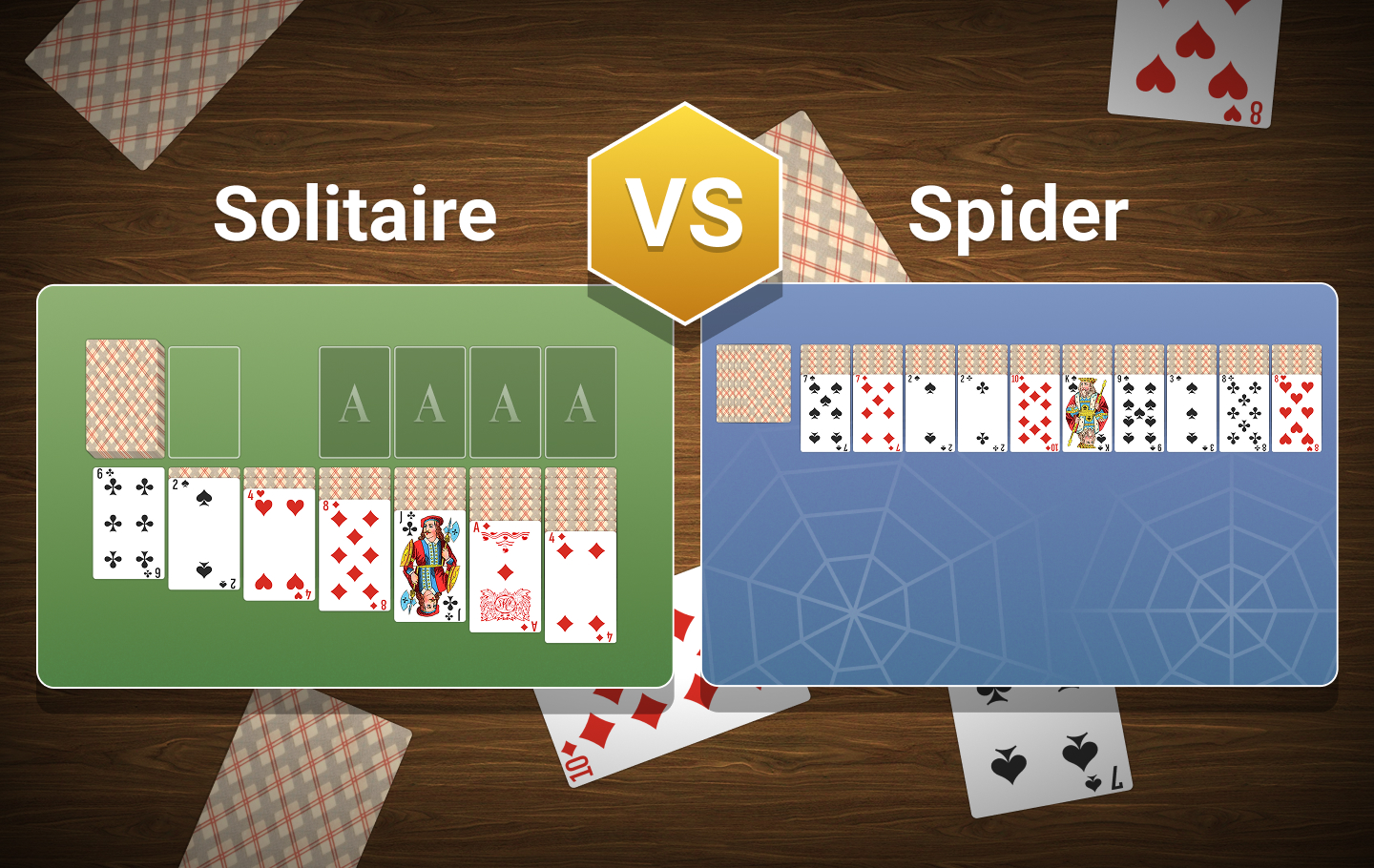
If you’ve ever wondered about the differences between classic Solitaire and Spider Solitaire, you’re not alone. While both games share the Solitaire name and involve arranging cards strategically, they offer distinctly different gameplay experiences that appeal to different skill levels and preferences. Understanding these key differences will help you choose the right game for your mood and skill level.
What Is Regular Solitaire?
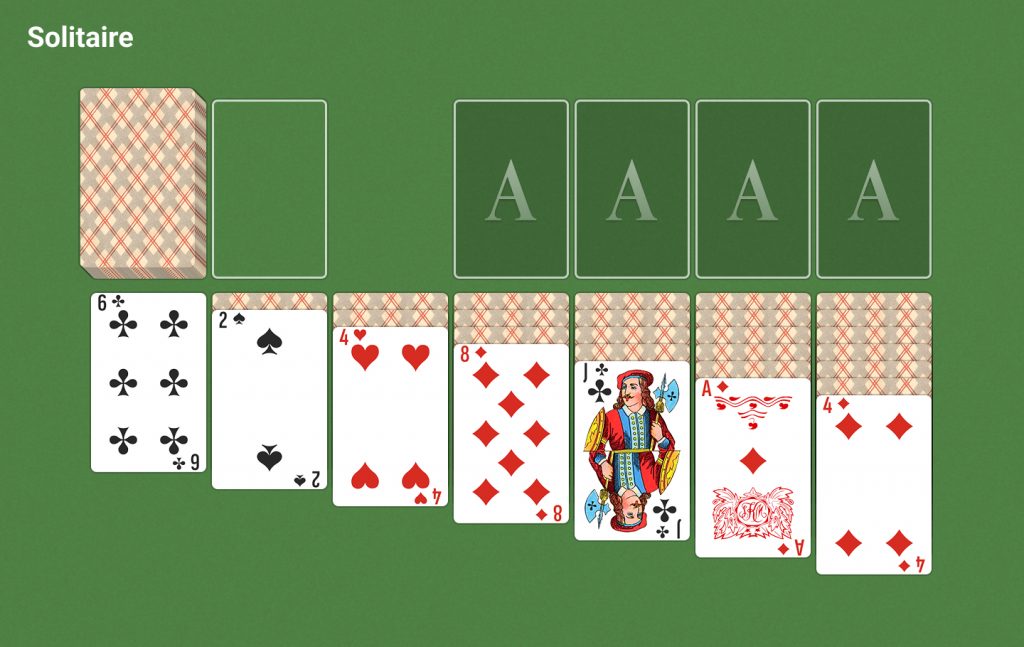
Klondike Solitaire, often called “Classic Solitaire” or simply “Solitaire,” is the most widely recognized version of the game. It uses a single standard 52-card deck and features a setup with seven tableau columns of increasing length and four foundation piles. The tableau begins with one card in the first column, two in the second, and so on until seven cards in the seventh column. Only the top card of each column is dealt face-up initially, and players draw from a stock pile to continue play.
In regular spider solitaire comparisons, Klondike is considered the standard form, where players build sequences in alternating colors (red on black, black on red) in descending order on the tableau. The primary challenge comes from managing the limited information you have — most cards start face-down, so you’re constantly making decisions based on incomplete knowledge. This element of discovery makes each game feel fresh.
What Is Spider Solitaire?
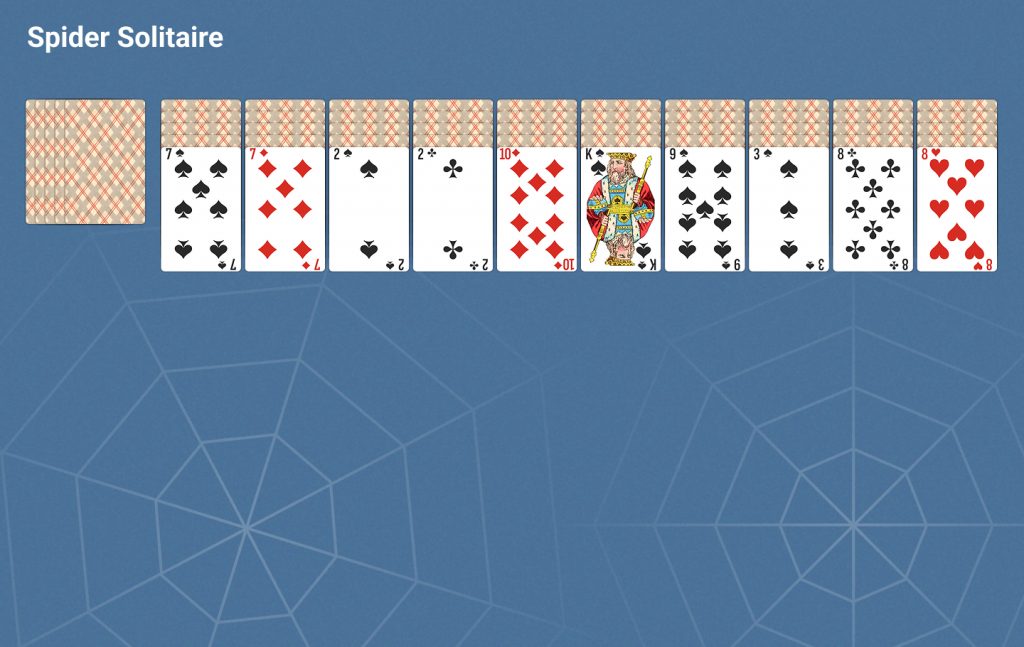
Spider Solitaire is a popular card game that uses two full decks (104 cards) and was widely popularized by Microsoft Windows alongside classic Solitaire. The basic setup consists of ten tableau columns, with 54 cards distributed at the start — the first four columns receive six cards each, while the remaining six columns receive five cards each. Only the top card in each column is face-up initially.
What sets Spider apart is its difficulty scaling system. The game offers three distinct variations: one-suit (easiest), two-suit (medium), and four-suit (hardest). Spider solitaire rules require players to build sequences in descending order. The key difference from Klondike is that you build complete sequences within the tableau itself rather than moving cards to separate foundation piles. This means you’re working with much more visible information, but the complexity comes from managing multiple long sequences simultaneously.
Goal and Foundations
The fundamental difference between Solitaire and Spider Solitaire lies in their objectives:
- Solitaire Goal: Build four foundation piles by suit, starting with Aces and working up to Kings.
- Spider Solitaire Goal: Create eight complete King-to-Ace sequences of the same suit within the tableau, which are then automatically removed.
In Solitaire, the goal is to move all cards to the foundations, building up by suit from Ace to King. Players work to uncover hidden cards and transfer them to the appropriate foundation piles at the top of the game area. You’ll often find yourself moving cards back and forth between tableau columns to access buried cards.
In Spider Solitaire, players must assemble eight full sequences of the same suit in descending order (King down to Ace) within the tableau itself. Once a complete sequence is formed, it automatically clears from the board, giving you more workspace. This creates a different rhythm — instead of gradually building up separate piles, you’re working toward complete sequences that disappear, freeing up space for new moves. This distinction is central to understanding solitaire vs spider solitaire, as it affects every strategic decision you make.
Decks and Suits
One Deck vs. Two Decks
Solitaire uses one standard 52-card deck, while Spider Solitaire uses two full decks (104 cards). This difference has significant gameplay implications. With 104 cards in Spider, you have twice as many cards to manage, which means more potential blocking situations and more cards to keep track of mentally. The doubled deck size also means you need to complete eight sequences instead of four foundations — effectively doubling the work required to win.
The additional cards create more opportunities for strategic maneuvering but also more ways to paint yourself into a corner. Empty columns become incredibly valuable in Spider because they give you the breathing room to untangle complex situations.
One-Suit, Two-Suit, or Four-Suit Modes
Spider Solitaire uniquely offers difficulty variants based on the number of active suits. The one-suit version uses only Spades throughout the game, making it the easiest variant. When every card is the same suit, you can move any sequence as a unit, which dramatically simplifies gameplay. This version is perfect for learning Spider’s mechanics without the added complexity of suit management.
Two-suit mode uses Hearts and Spades, providing medium difficulty. Here, you need to start thinking about suit separation — you can temporarily build mixed sequences, but you’ll need to separate them eventually to create complete same-suit runs.
Four-suit mode is the hardest, using all four suits similar to traditional Solitaire. This version requires careful long-term planning because mixed-suit sequences can quickly become tangled. You might build a temporary stack only to realize you’ve blocked yourself from creating the same-suit sequence you need.
In contrast, Solitaire always uses all four suits. The number of suits in Spider directly correlates with difficulty level, giving players control over their challenge.
Tableau Setup And Sequence Building
Classic Seven Columns vs. Ten Columns
The initial tableau layouts differ significantly:
| Feature | Solitaire | Spider Solitaire |
| Number of columns | 7 | 10 |
| Initial face-up cards | 7 (one per column) | 10 (one per column) |
| Empty column usage | Can only place Kings | Can place any card |
Solitaire features seven columns of increasing length (1-7 cards, totaling 28 cards), while Spider has ten columns with 54 cards distributed unevenly. The wider tableau in Spider provides more workspace but also requires managing more columns simultaneously.
The empty column rules reveal a key strategic difference. In Solitaire, only Kings can fill empty spaces, which limits your options when you clear a column. You’re often waiting for a King to appear so you can make use of that valuable empty space. In Spider, any card or sequence can be placed in an empty column, making these spaces incredibly flexible. Experienced Spider players treat empty columns as temporary holding areas for untangling difficult sequences.
Descending Rank and Mixed Suits
Sequence building rules are another major difference:
- Solitaire: Build sequences in descending rank with alternating colors (red/black). For example, you can place a red 6 on a black 7.
- Spider: Build sequences in descending rank regardless of suit, but only complete same-suit sequences can be moved as units.
This is one of the most significant gameplay differences. In Solitaire, color alternation is mandatory, and any properly built sequence (descending with alternating colors) moves as a unit. This makes planning relatively straightforward — if you can see a red Queen, you know you can place a black Jack on it.
In Spider, you have more initial flexibility but face stricter long-term requirements. You can place any 6 on any 7, regardless of suit. However, only same-suit sequences move together. If you build a Hearts 10 on a Spades Jack, you can only move the 10 by itself, not the Jack beneath it. This creates interesting tactical choices — sometimes you’ll temporarily mix suits to uncover cards, knowing you’ll need to separate them later.
Difficulty Level and Winning Chances
Spider Solitaire, especially in its four-suit version, is generally considered more challenging than Klondike Solitaire. The challenge comes from several factors. First, the two-deck system means more cards to manage and more potential deadlocks. Second, the requirement to build complete same-suit sequences from King to Ace is more restrictive than Klondike’s alternating-color system. Third, every deal from the stock adds a card to all ten columns simultaneously, which can quickly clutter your tableau if you’re not prepared.
Empty columns are more strategic in Spider than in Solitaire. In Solitaire, an empty column is nice to have but not always necessary. In Spider, maintaining at least one empty column often makes the difference between winning and losing. These spaces let you temporarily move cards out of the way, separate mixed-suit sequences, and create the maneuvering room needed for complex rearrangements.
The increased difficulty comes with a trade-off: Spider provides more information upfront. With ten face-up cards visible at the start and the ability to move full sequences, you can often plan several moves ahead. Solitaire, with its hidden cards and single-card stock draws, requires more adaptation to changing circumstances.
7 Key Differences Between Solitaire and Spider Solitaire
- Deck Size: Solitaire uses one 52-card deck; Spider uses two full decks (104 cards), doubling both the challenge and the number of sequences you must complete.
- Tableau Layout: Solitaire has 7 columns of increasing size (1-7 cards); Spider has 10 columns with 54 cards distributed more evenly.
- Game Objective: Solitaire builds four foundation piles by suit from Ace to King; Spider creates eight same-suit sequences from King to Ace within the tableau.
- Sequence Building: Solitaire requires alternating colors in descending order; Spider allows any suit in descending order, but only same-suit sequences can be moved as units.
- Stock Usage: Solitaire deals cards to a waste pile one at a time, letting you cycle through; Spider deals a new row across all tableau columns, which you cannot cycle through.
- Empty Columns: In Solitaire, only Kings can be placed in empty columns; in Spider, any card or sequence can fill empty columns, making them valuable strategic tools.
- Difficulty Variants: Solitaire has one standard mode; Spider offers one-suit, two-suit, and four-suit variants with increasing difficulty, letting you choose your challenge level.
These are the core distinctions that define solitaire vs spider solitaire and help players choose the right game for their preferences.
Common Misconceptions About Suits and Modes
Confusion About Two-Deck Gameplay
Many players are confused by Spider Solitaire’s two-deck system, particularly regarding how the stock works. Despite using two decks, not all cards are dealt at the beginning — 50 cards remain in the stock. When you click the stock, Spider deals one card face-up to each of the ten tableau columns simultaneously. This creates an immediate challenge: you need at least one card in every column to deal from the stock. If you have an empty column, you cannot deal.
This is quite different from Solitaire’s stock and waste pile system, where cards are dealt one at a time to a waste pile, and you can cycle through the stock multiple times (depending on the game settings). In Spider, once you deal from the stock, those cards remain where they land. You cannot undo a deal or cycle back through the stock. This makes timing your deals one of the most important strategic decisions in Spider — deal too early, and you might bury useful cards; wait too long, and you might run out of productive moves.
Sorting Mixed Suits vs. Same Suit
Another common misconception is about building mixed-suit versus same-suit sequences in Spider. Beginners often build mixed-suit sequences freely, then discover they’ve created an untangleable mess. The flexibility to place any suit on any card is both Spider’s greatest feature and its biggest trap.
While Spider allows you to build temporary sequences with any suit, only same-suit sequences can be moved as a unit. For example, in regular spider solitaire, you might place a Hearts Queen on a Spades King to access a card beneath the Queen. This works temporarily, but you cannot move both cards together. If you later need to move that King, the Queen stays behind. The ultimate goal is to convert these mixed sequences into same-suit sequences before completing them.
Experienced players minimize mixed-suit building when possible. They’ll often leave a less useful move available rather than mix suits unnecessarily. When you must mix suits, do so with a plan for how you’ll separate them later. The key is recognizing that every mixed-suit build is a small debt you’ll need to repay through future maneuvering.
Your Next Move
Which game should you play? The answer depends on your goals and mood. Beginners might prefer classic Solitaire for its simpler rules and clearer objectives, or the one-suit version of Spider for an introduction to Spider’s mechanics without suit complexity. If you want a game that rewards careful planning and offers deep strategic depth, four-suit Spider Solitaire provides that challenge. For a quick game during a break, classic Solitaire typically plays faster.
Both games offer cognitive benefits, including improved memory, pattern recognition, and planning skills. The key is finding the version that matches your preferred level of challenge and time commitment. Try both games on TheSolitaire.com, which offers a clean, distraction-free environment for classic Solitaire and all Spider Solitaire variations.
FAQs About Solitaire and Spider Solitaire
Is spider solitaire harder than regular solitaire?
Yes, Spider Solitaire — especially in four-suit mode — is generally considered more challenging than regular Solitaire. The difficulty comes from managing 104 cards instead of 52, building complete same-suit sequences from King to Ace, and planning around the stock deals that add cards to all ten columns at once. However, one-suit Spider is actually easier than Klondike Solitaire for many players because all cards are the same suit.
Can you win every game of spider solitaire?
No, not every Spider Solitaire game is winnable, particularly in four-suit mode. Even with perfect play, some deals have no solution. However, a skilled player can win the majority of one-suit games and a significant portion of two-suit games. Four-suit Spider has the lowest win rate among the variants.
Why are there different suit options in spider solitaire?
Different suit options (one, two, or four suits) provide varying difficulty levels based on how many suits you need to separate and manage. One-suit Spider removes suit complexity entirely, letting you focus on learning the sequence-building mechanics. Two-suit and four-suit modes add layers of strategic depth by requiring you to plan how to separate mixed-suit sequences and build complete same-suit runs.
What is the best strategy for winning at spider solitaire?
The most important strategy is creating and maintaining at least one empty column whenever possible. Empty columns give you workspace to untangle mixed sequences and rearrange cards. Also, minimize mixing suits when building sequences — every mixed-suit stack is a future problem you’ll need to solve. Try to expose hidden cards in the columns with the most face-down cards first, and avoid dealing from the stock until you’ve exhausted all useful moves in the tableau.
Which solitaire game is better for beginners?
Classic Klondike Solitaire or one-suit Spider are both excellent for beginners. Klondike offers simpler rules with its seven-column layout and alternating-color building. One-suit Spider introduces the ten-column layout and sequence-building mechanics without the added challenge of managing multiple suits. Try both to see which style you prefer.